
6th World Congress on Agroforestry 2025
Date
September 13, 2025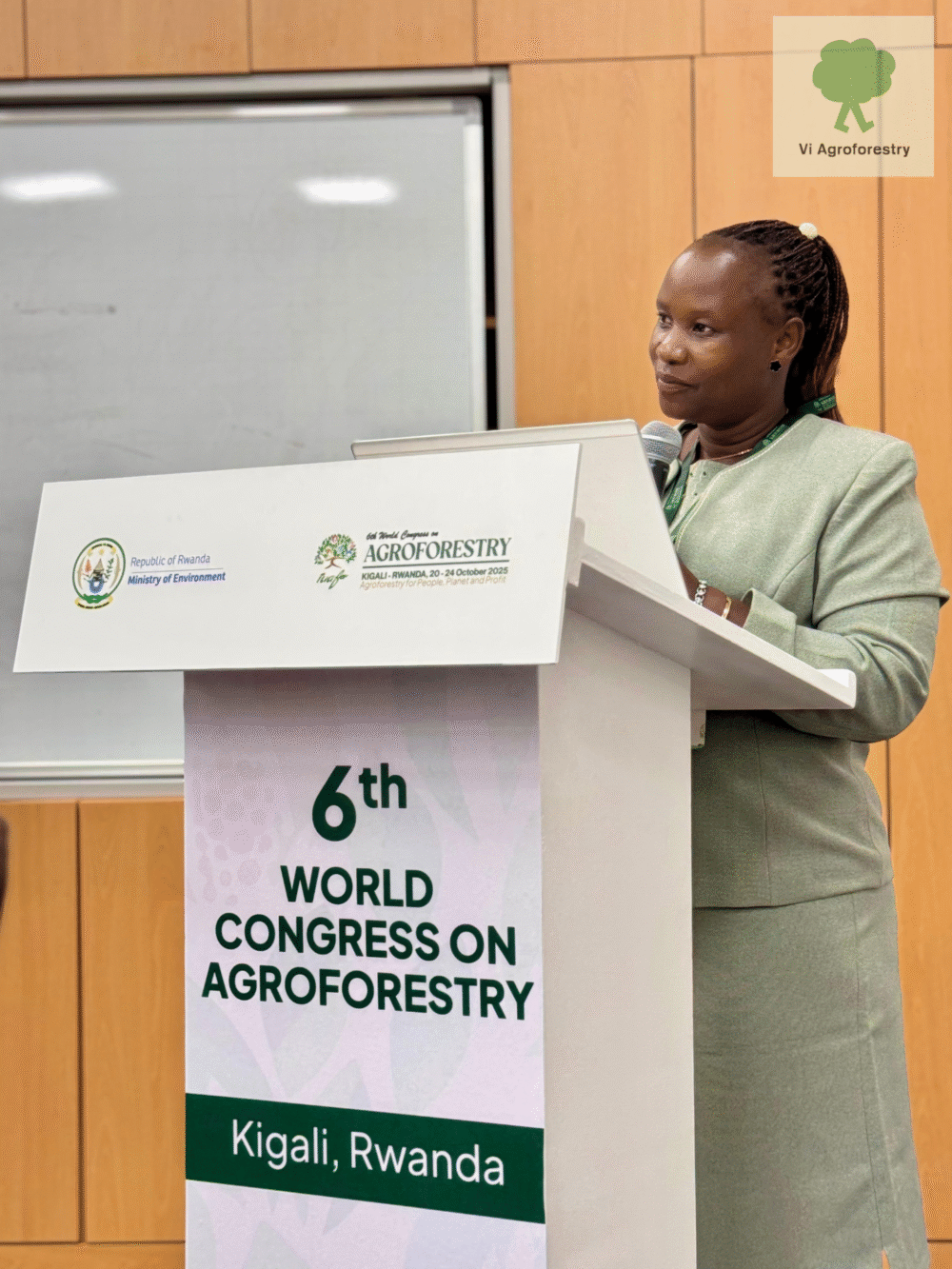
Dr. Sarah Kezia speaks at the 6th World Congress on Agroforestry, presenting on “Climate-Resilient Agroforestry Systems for Drylands: Pathways to Adaptation and Sustainability in East Africa.” Her session inspired deep discussion on inclusive, scalable solutions for climate adaptation in dryland regions.
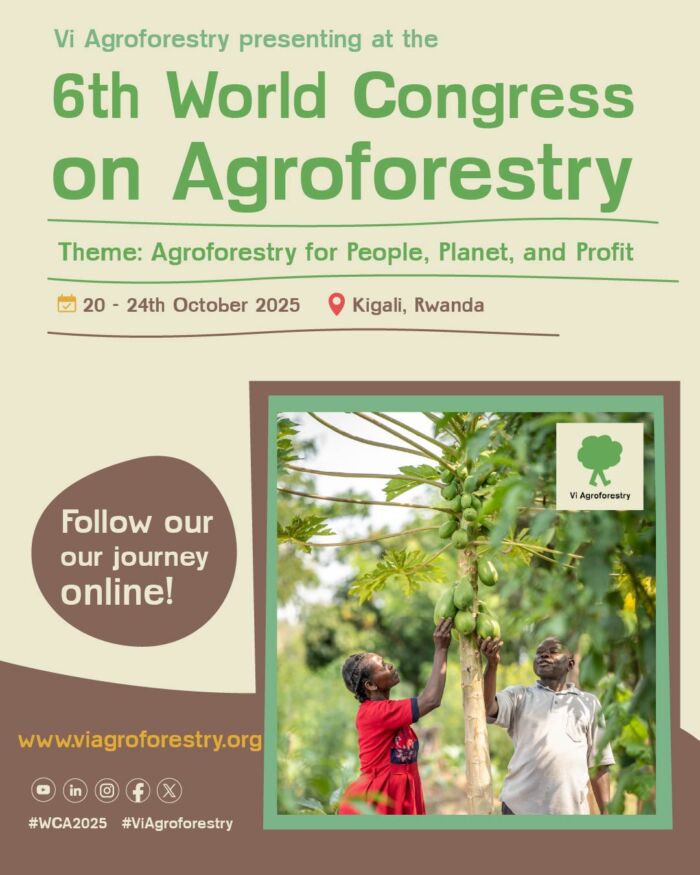
The 6th World Congress on Agroforestry (WCA2025) is underway in Kigali, Rwanda from 20–24 October 2025, bringing together scientists, policymakers, and practitioners from around the world under the theme “Agroforestry for People, Planet, and Profit.”
The congress explores how agroforestry can deliver multiple benefits for people’s livelihoods, environmental restoration, and sustainable economies. Vi Agroforestry is proud to be part of this global event, sharing lessons from over four decades of work in sustainable land management, farmer organization strengthening, and climate adaptation across East Africa.
Our participation highlights practical research, evidence, and community experiences showing that agroforestry is a solution that works — for people, planet, and sustainable livelihoods.
Follow our journey in Kigali on our social media:
Facebook Instagram LinkedIn YouTube X
Day 1 – Agroforestry for a Changing Climate

The congress opened with inspiring discussions on how agroforestry can drive global transformation by linking food security, biodiversity, and climate resilience.
🌿 Vi Agroforestry’s guest presenter Sarah Kezia led an engaging session titled “Climate-Resilient Agroforestry Systems for Drylands: Pathways to Adaptation and Sustainability in East Africa.”
Her presentation highlighted innovative approaches to dryland restoration and climate adaptation, showcasing real examples from East Africa where agroforestry is strengthening community resilience, restoring degraded ecosystems, and securing livelihoods for smallholder farmers.
The session drew thoughtful questions and lively debate from participants passionate about climate adaptation, ecosystem restoration, and farmer-centered solutions.
“Agroforestry is one of the most practical solutions to climate challenges in drylands. When we work with nature, we create systems that last,” said Sarah during her presentation.
💬 We’d love to hear from you — how can we make dryland agroforestry systems more inclusive and scalable?
Find out more about the Agroforestry Expert Group by Vi Agroforestry and SIANI here:
https://www.viagroforestry.org/projects/dryland-expert-group/
#Agroforestry #ClimateAction #Resilience #Sustainability #ViAgroforestry #WCA2025 #PeoplePlanetProfit
Day 2 Recap – Science for a Greener Future
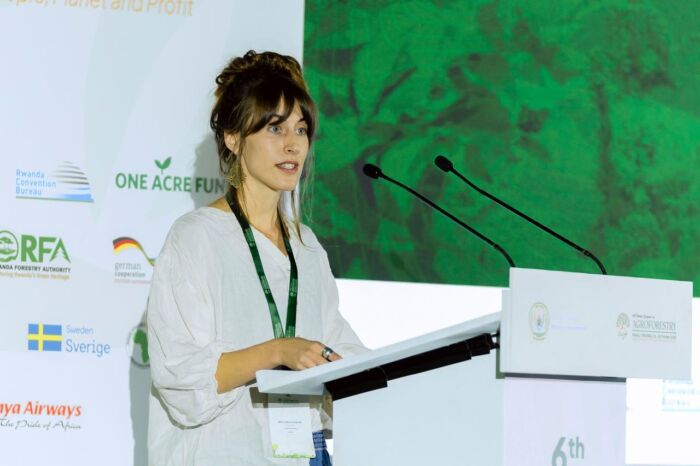
Today at the 6th World Congress on Agroforestry, Vi Agroforestry’s Linnea Pasquier presented new research on “Agrobiodiversity and Soil Health in Agroforestry Systems: Evidence from Kenya and Tanzania.”
Her findings reveal that agroforestry farms host more than twice the plant and animal species diversity compared to non-adopters — a clear sign that trees on farms nurture healthier, more resilient ecosystems. 🌱
🧪 Key insight:
Agroforestry doesn’t just store carbon — it restores life. From richer soils to thriving biodiversity, the study proves that when we grow trees, we grow ecosystems that sustain people, planet, and profit.
More species, more life, more impact.
#Agroforestry #Biodiversity #ClimateAction #ViAgroforestry #WCA2025 #PeoplePlanetProfit #Sustainability #SoilHealth
Day 3
Field Visit: Exploring Rwanda’s Restoration and Agroforestry Demonstration Sites
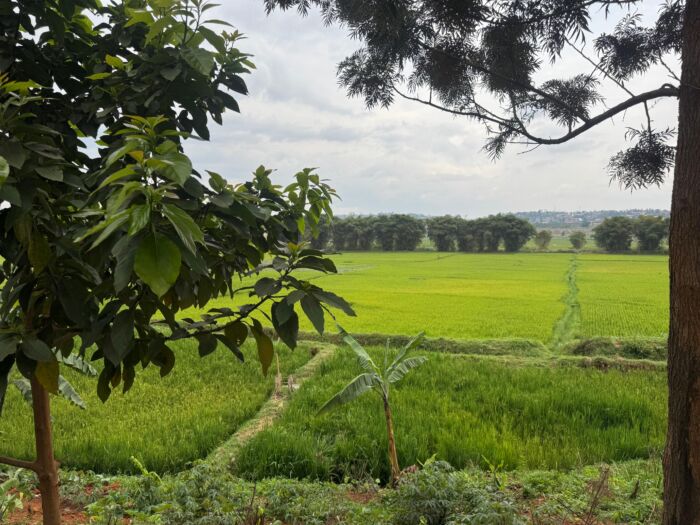
On Wednesday, 22 October 2025, the Vi Agroforestry team and conference delegates undertook on-site visits to two major agroforestry & restoration venues in Rwanda:
-
Bugesera Site – TREPA Project (RICA Campus, Bugesera District, Eastern Province)
-
Gicumbi Site – Green Gicumbi Project (Gicumbi District, Northern Province)
Throughout both field visits, delegates engaged in interactive sessions with local practitioners, visited demonstration plots, and discussed challenges such as species selection, maintenance, scaling, and climate risks.
Day 4
Enhancing Smallholder Coffee Livelihoods through Agroforestry and Climate-Smart Practices
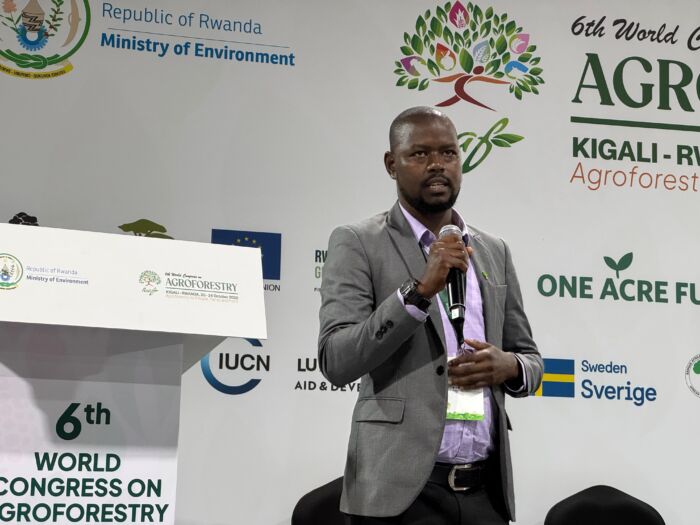 Vi Agroforestry’s Rashid Malya presented at the 6th World Congress on Agroforestry, sharing key outcomes from the CODE-P Project in Tanzania’s Southern Highlands. The presentation showcased how over 24,000 smallholder coffee farmers have improved productivity, income, and climate resilience by integrating agroforestry and sustainable farming practices. The project’s success demonstrates how investing in coffee and trees together delivers benefits for both people and the planet.
Day 5
Day 5: Transforming Smallholder Livelihoods Through Agroforestry and Climate-Smart Innovation
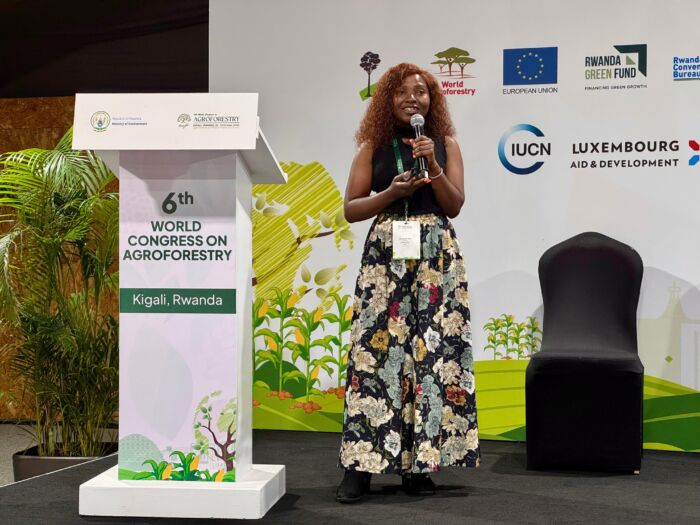
The final day of the 6th World Congress on Agroforestry featured Virginia Ngei from Vi Agroforestry presenting the Kenya Agricultural Carbon Project (KACP) — one of Africa’s flagship initiatives linking smallholder farming, climate resilience, and carbon finance.
Virginia shared how over 30,000 farmers have adopted Sustainable Agricultural Land Management (SALM) practices that enhance productivity, improve soil carbon storage, and contribute to verified carbon credit generation. Her session highlighted how integrating agroforestry and carbon markets empowers rural communities to build climate resilience and secure better livelihoods.
The KACP continues to stand as a model of how farmer-led climate action can deliver tangible benefits for people and the planet.