
Strengthening community-led rangeland restoration in West Pokot, Kenya
Date
May 26, 2026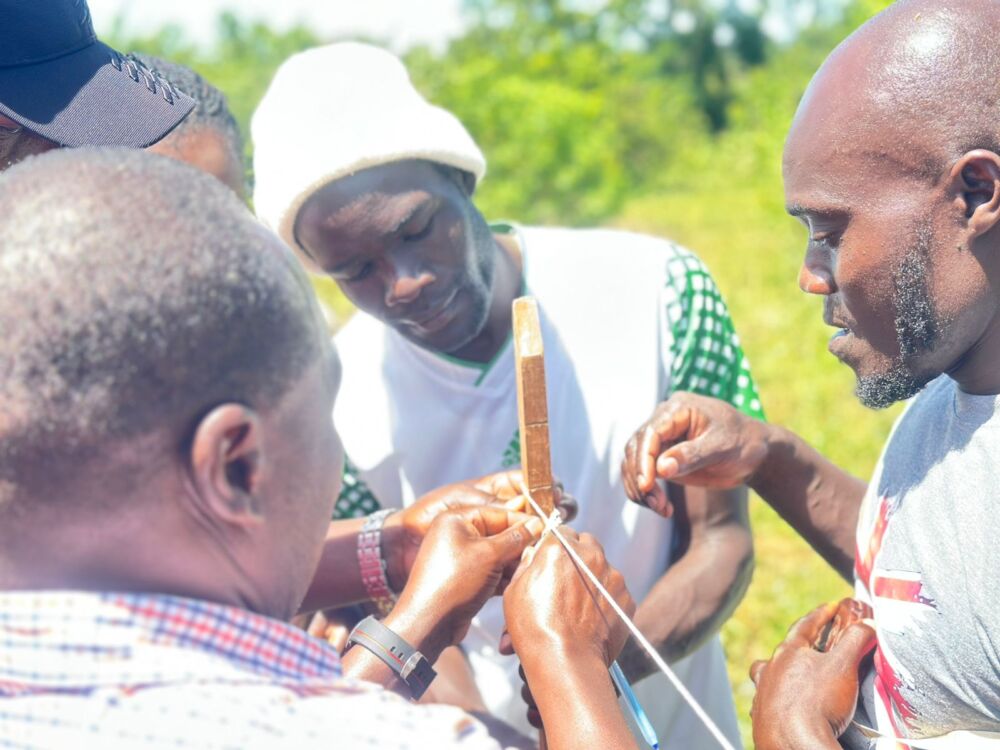
Participants examine grass species used for reseeding and pasture restoration during the practical fodder production session. Photo: S. Mureithi
Empowering communities to restore rangelands in West Pokot
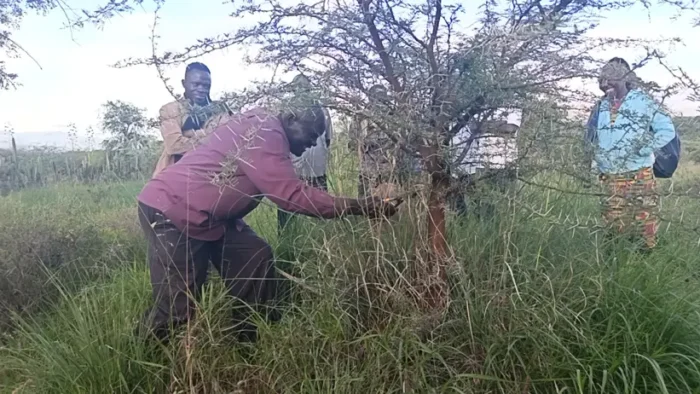
Vi Agroforestry, through the Restore4More initiative led by the Swedish University of Agricultural Sciences (SLU), is supporting a community-led approach to scaling sustainable rangeland restoration in West Pokot County, Kenya.
Over the past year, the project has focused on building local capacity by identifying and working with community groups to select and train community facilitators. These facilitators act as trusted local focal persons, supporting knowledge sharing, practical training, and restoration activities within their communities.
In March 2026, a five-day training of trainers was held in Chepareria, bringing together community facilitators, including representatives from ASILI-B CC partner areas in Western Kenya, Elgeyo Marakwet, and Narok. Participants from other Restore4More project landscapes in Kenya and Uganda also joined, creating a platform for cross-learning, peer exchange, and the sharing of practical experiences in rangeland restoration.
By strengthening networks of community facilitators and promoting participatory learning approaches, the Restore4More initiative is contributing to locally driven solutions for restoring degraded rangelands and improving livelihoods in dryland areas.