
Launch of Feeding the Future: Agroforestry for Nutrition and Food Security
Date
June 3, 2026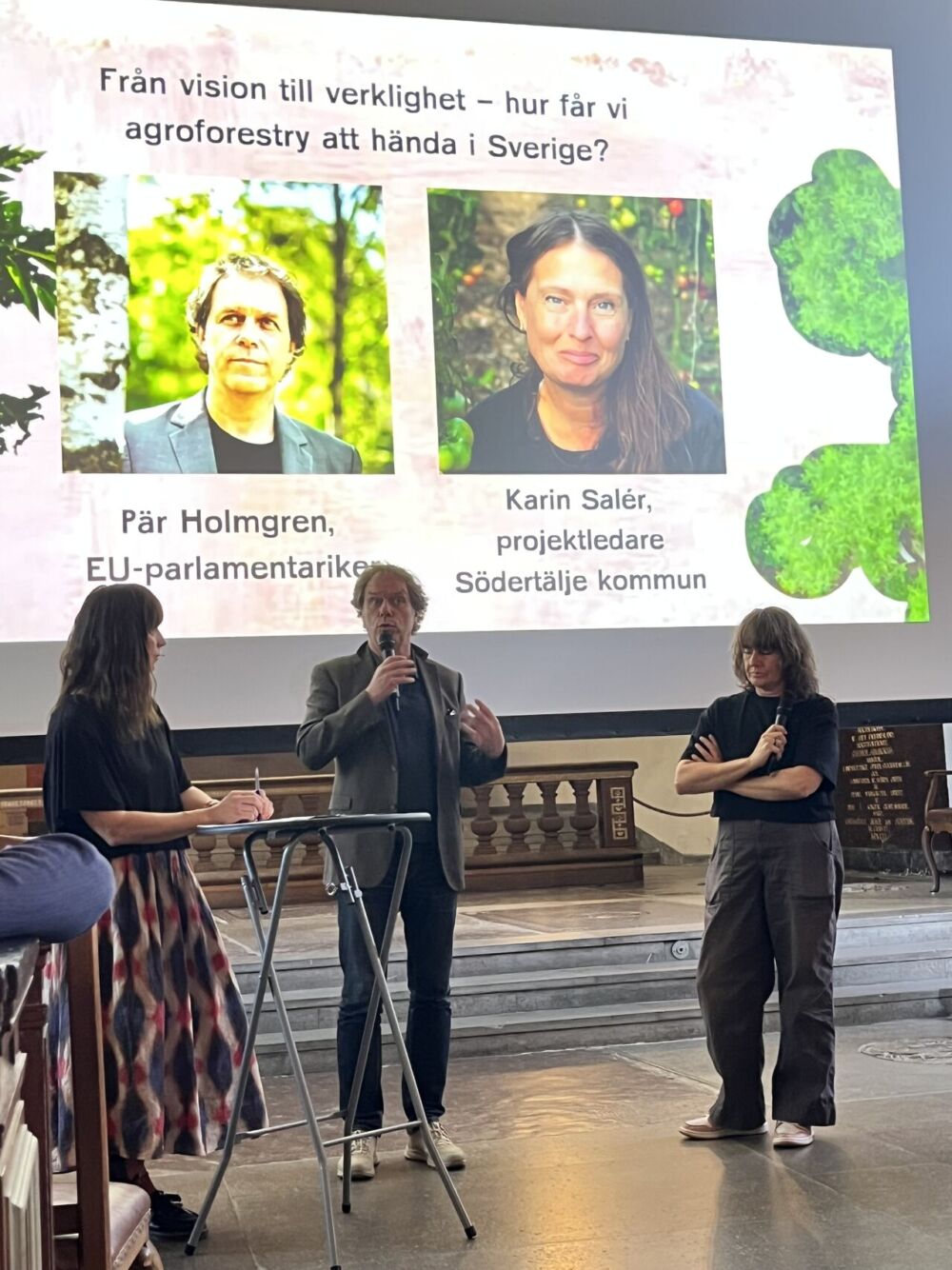
The brief was recently launched at a public event bringing together policymakers, practitioners, researchers and communicators to discuss the future of food systems – from global challenges to local solutions.
A food system under pressure
Today’s food systems are increasingly exposed to multiple, overlapping crises. Climate change, biodiversity loss, geopolitical tensions and social inequalities are all contributing to persistent food insecurity and malnutrition. At the same time, global diets rely heavily on a narrow base: around 60 percent of plant-based calories come from just three crops – rice, maize and wheat. Meanwhile, an estimated 75 percent of crop genetic diversity has been lost over time. This lack of diversity makes food systems more vulnerable to external shocks. The result is a growing “triple burden of malnutrition,” where hunger, overweight and micronutrient deficiencies coexist across regions.
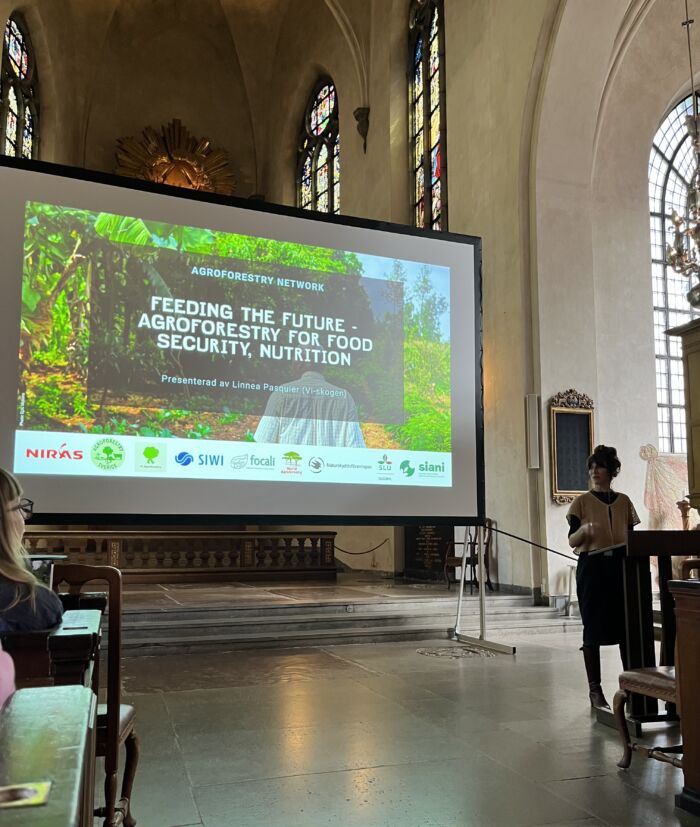
Linnea Pasquier from Vi Agroforestry presented the brief
Agroforestry as part of the solution
The policy brief highlights agroforestry as a key pathway towards more resilient and nutritious food systems. By integrating trees, crops and sometimes livestock, agroforestry systems can:
- diversify production and diets
- increase resilience to climate and economic shocks
- improve access to nutrient-dense foods
- strengthen local livelihoods and governance
- empower women and support more inclusive food systems
Rather than focusing on single solutions, the brief emphasises the importance of integrated approaches that work across sectors and scales.
From policy to practice: Insights from the launch
The launch event reflected this systems perspective by bringing together a wide range of voices and experiences. Discussions highlighted how food system challenges must be addressed holistically – connecting agriculture, nutrition, environment and governance. Contributions from policy experts explored how national and EU-level decisions shape food systems, while practitioners shared perspectives on implementing agroforestry in a Swedish context.
A local example from Malmö illustrated how cities can play a role in driving change. Through the STAD platform, local actors collaborate to test and scale sustainable food solutions, including efforts to make healthy and sustainable food more accessible in public spaces and to engage citizens through communication and storytelling.
The event also included a tasting of nutritious food prepared by a professional chef, offering a tangible reminder of the importance of diet quality – not just quantity – in food systems.
Key recommendations for scaling impact
To realise the potential of agroforestry at scale, the policy brief outlines a set of interconnected recommendations:
- Integrate agroforestry into policy and public budgets
- Strengthen participatory knowledge systems, including local and Indigenous practices
- Support agroecological transitions that enhance diversity and nutrition
- Ensure gender-equitable and inclusive governance
- Mobilise long-term, aligned financing for food security and nutrition
These actions require collaboration across governments, researchers, producers and financial actors.
From vulnerability to resilience
A key message from both the brief and the discussions is that current food systems may appear stable, but are often fragile beneath the surface. In Sweden, as in many other contexts, recent global disruptions have sparked a growing debate about dependency on imported inputs such as fertilisers, fuel and feed. This has renewed interest in building more resilient, diversified and locally grounded food systems.
Agroforestry offers one pathway forward – reconnecting production with ecological processes, strengthening local capacities, and supporting healthier diets. As highlighted throughout the event, the challenge now is not only to understand these solutions, but to scale them in practice.